Portable Power Stations \18Item(s) Found
Portable Power Stations \18Item(s) Found
EcoFlow 220W Lightweight Portable Solar Panel
25% Conversion Rate | IP68


EcoFlow Power Hat

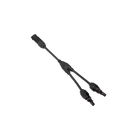
EcoFlow Solar Extension Cable


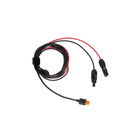
EcoFlow Super Flat Cable


EcoFlow 220W Lightweight Portable Solar Panel (Members-Only)


EcoFlow 160W Lightweight Portable Solar Panel (Members-Only)


EcoFlow 400W Lightweight Portable Solar Panel
More Features


Frequently Asked Questions
The number of solar panels needed to power a home depends on various factors, including the home's energy consumption, the location's sunlight availability, the efficiency of the solar panels, and the desired level of energy independence. Here's a general guideline to help you estimate:
1. Calculate your energy consumption: Determine your home's average monthly or annual energy use in kilowatt-hours (kWh).
2. Assess sunlight: Consider the amount of sunlight your location receives daily and throughout the year. Areas with more sunlight will require fewer solar panels.
3. Determine solar panel capacity: Solar panels are typically rated in watts (W) or kilowatts (kW). To calculate the number of solar panels required, you need to know the capacity of each panel. For example, if you had 100W panels, 1 kW would equal ten panels.
4. Consider efficiency and losses: Solar panels have an efficiency rating that indicates the percentage of sunlight they can convert into electricity. Consider this efficiency when calculating the number of panels required.
5. Calculate the number of panels: Divide your energy consumption by a solar panel's average daily energy production. This calculation will give you an estimate of the number of panels needed.
Residential solar panels operate using the photovoltaic effect. They harness photons from sunlight and convert them into DC electricity. Balance of system components like inverters, solar batteries, and charge controllers are then used to convert and store this energy for household use.
The price of solar panels varies based on cell composition, quality performance, and durability. Monocrystalline panels are more
expensive but more efficient, whereas
polycrystalline panels are less efficient and less aesthetically pleasing. Monocrystalline panels often offer better long-term ROI.
Installation methods vary based on panel type and location.
Portable panels need no installation but can be a theft risk. Mounted rigid solar panels, typically installed on
roofs, offer secure and efficient energy generation.